
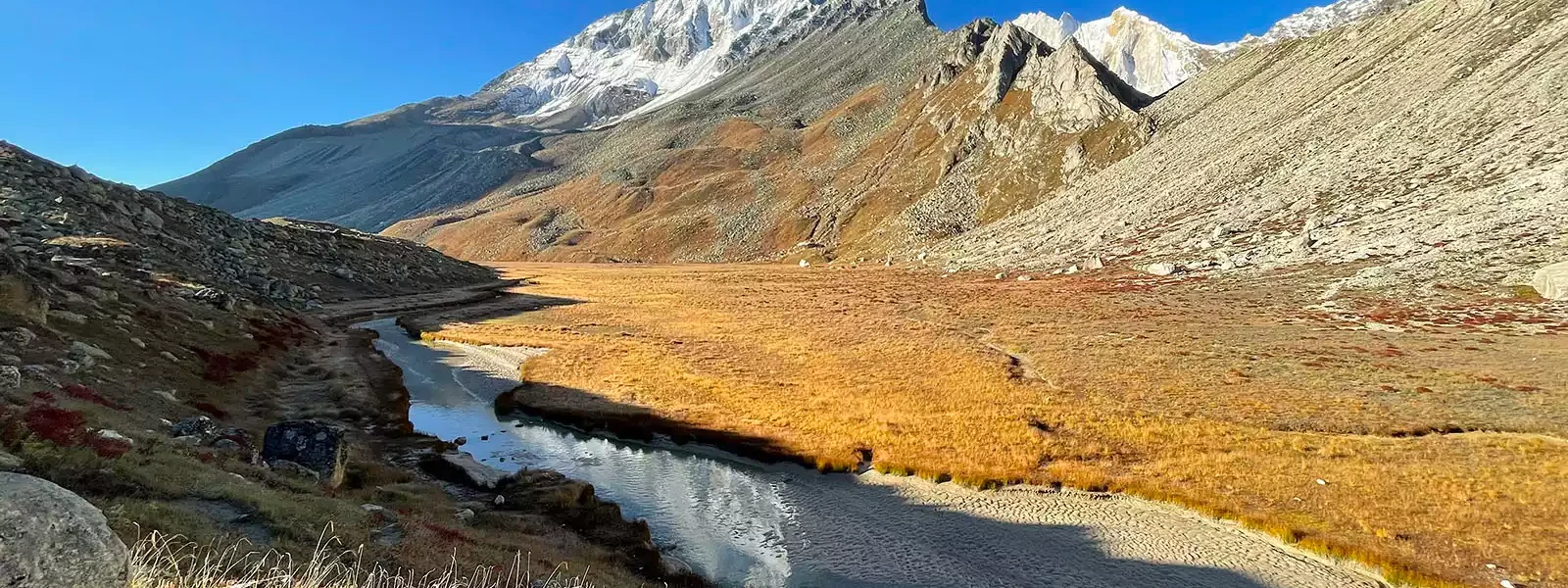
The Gangotri Glacier — at 30 km long and 2–4 km wide — is one of the most significant glaciers in Asia. It serves as the primary source of the Bhagirathi River, which later becomes the holy Ganga, providing essential water to millions in the Indo-Gangetic plain. As this ancient river of ice undergoes rapid retreat, every pilgrim who visits Gangotri should understand the vital ecological importance of this sacred glacier.
What is the Gangotri Glacier?
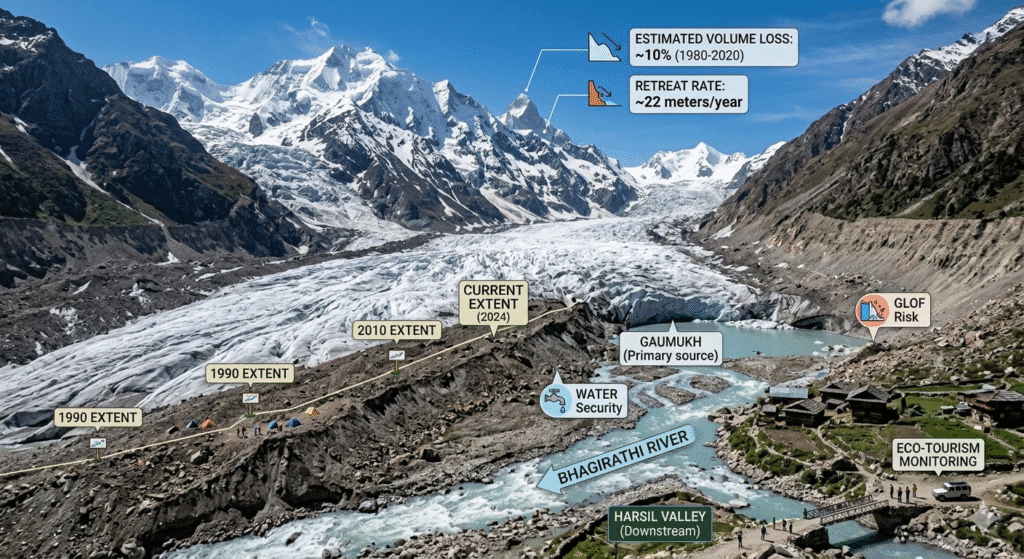
Located near the Kedarnath and Gangotri mountain ranges, the Gangotri Glacier originates at elevations exceeding 7,000 metres. It descends to its terminal snout at Gaumukh (3,892 m), the site from which the Bhagirathi River emerges. Spanning approximately 86 square kilometres, the glacier is sustained by winter snowfall and ice accumulation at high altitudes.
Understanding the Annual Recession Rate
Extensive research conducted by the Geological Survey of India (GSI) and other global scientific institutions highlights a concerning trend in the glacier’s stability:
- Historical Trend: During the late 20th century, the glacier retreated by an average of 22 metres annually.
- Acceleration: Modern studies indicate that the rate of retreat is continuing to accelerate.
- Total Loss: Since official monitoring began in 1780, the glacier has receded by more than 2 kilometres.
Climate Change: The Primary Driver
The primary catalyst for this retreat is global climate change, which is causing Himalayan temperatures to rise faster than the global average. This makes the Gangotri Glacier highly sensitive to warming. Additionally, the accumulation of black carbon—soot from biomass burning and fossil fuels—darkens the ice surface, causing it to absorb more solar heat and further accelerating the melting process.
Why the Ganga Depends on Gangotri
While the Ganga is fed by monsoon rains, groundwater, and meltwater, the glacier acts as a critical “water tower.” During the dry winter and pre-monsoon seasons, glacier melt is the primary contributor to the river’s flow. Any significant loss of this ice storage could threaten the long-term water security and agricultural stability of the entire Indo-Gangetic plain.
How Pilgrims Can Support Conservation
Every visitor to the sacred heights of Gangotri shares a responsibility to protect this fragile environment. By adopting eco-conscious habits, you contribute directly to the preservation of the Himalayas. Review our full guide on Sustainable Eco-Friendly Chardham Yatra and follow these essential tips:
- Go Plastic-Free: Strictly avoid single-use plastics in the region.
- Choose Biodegradable: Use only eco-friendly toiletries and products.
- Zero Waste: Carry reusable water bottles and pack out all your waste.
- Support Sustainability: Choose to stay at eco-certified accommodation in Gangotri.
- Act Responsibly: Report instances of illegal waste dumping to local authorities.
As you plan your pilgrimage, remember that the journey to the Gangotri Temple is as much about reverence for nature as it is about faith. We recommend exploring our lists of top attractions in Gangotri to deepen your experience. For those still finalizing logistics, our comparison of the difficulty of the Yamunotri vs. Gangotri Yatra can help you prepare for the terrain.
The Gangotri Glacier represents the intersection of divine tradition and environmental reality. Preserving this lifeline is both a spiritual duty and an urgent ecological necessity for our future.